Unveiling the Timeless Beauty of Lace Pattern Elements
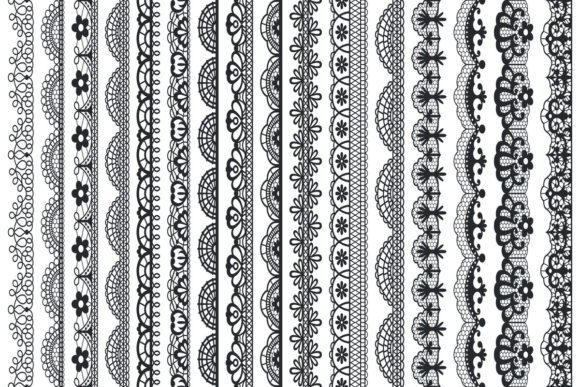
In the world of digital design, we often get caught up in the latest sans serif trends or bold display typography, but sometimes the most impactful visual comes from texture rather than type. If you are looking to inject a sense of history, romance, or intricate detail into your next project, the Lace Pattern Elements collection is a resource you shouldn't overlook. This isn't just a generic clip-art set; it is a carefully curated collection of seamlessly woven decorations that capture the delicate essence of vintage textile work. The visual personality of these elements is defined by their softness and complexity. Unlike hard-edged geometric shapes, lace patterns suggest a tactile quality—they look soft to the touch. They evoke a sense of nostalgia, making them perfect for projects that aim to feel personal, handmade, or historically significant.
The appeal of this specific collection lies in its versatility within that romantic and retro niche. Whether you are designing for a high-end wedding brand or creating a vintage-inspired product label, the Lace Pattern Elements provide that authentic "analog" feel that digital tools sometimes struggle to replicate. The intricate weave of the patterns creates a visual rhythm that is pleasing to the eye without being overwhelming. It serves as a sophisticated background texture that adds depth and character, allowing your main content to shine while still maintaining a rich, decorative atmosphere.
Strategic Applications for Modern Creators
Understanding where to deploy these Lace Pattern Elements is key to maximizing their impact. While they are an obvious fit for the wedding industry, their utility extends far beyond invitations and save-the-dates. As a designer or entrepreneur, you can leverage these assets to elevate your brand identity in several distinct ways.
- Packaging Design: For small business owners in the beauty, artisanal food, or jewelry sectors, packaging is your first handshake with the customer. Using these lace patterns as a border or a full background on a box sleeve can instantly communicate "premium" and "handcrafted." It suggests that the product inside was made with care and attention to detail.
- Digital Marketing & Social Media: In the fast-paced world of social media graphics, stopping the scroll is essential. A soft, lace-textured background can make a quote card or a product announcement stand out against the harsh, flat colors usually found in feeds. It adds a layer of visual hierarchy that draws the eye.
- Editorial & Web Design: For bloggers and publishers, particularly those covering lifestyle, history, or DIY crafts, these elements work beautifully as chapter dividers, page footers, or sidebar accents. They help break up long blocks of text and contribute to the overall atmosphere of the publication.
- Logo Design Accents: While you wouldn't want to create a complex logo entirely out of lace, using a simplified section of the pattern as an underline or a framing device can give a modern typeface a vintage twist.
When integrating these into web design, remember that lace is a detail-oriented texture. It works best when paired with plenty of whitespace. If you crowd the layout with too many competing elements, the lace will lose its elegance and start looking cluttered. Think of it as the filigree on a picture frame—it enhances the picture, it doesn't try to be the picture.
Typography and Pairing: Finding the Right Balance
One of the most common questions when working with intricate design assets like Lace Pattern Elements is: "What fonts do I use with this?" The answer lies in contrast and hierarchy. Because lace patterns are inherently complex and curvaceous, they pair best with typefaces that are clean, legible, and structured.
Avoid using overly ornate script fonts or highly decorative handwritten fonts directly on top of the lace, as this will result in visual chaos. Instead, consider the following font pairing strategies:
- Classic Serifs with Modern Sans Serifs: Pair a sturdy serif font for your headings with a clean sans serif font for your body copy. The serif font echoes the traditional roots of the lace, while the sans serif ensures the text remains highly readable and contemporary.
- Light Weight Display Fonts: If you want to use a display font or premium font for a header, choose one with a consistent weight and geometric structure. The sharp lines of a modern display font will stand out beautifully against the soft, woven texture of the lace background.
- Monolinear Scripts: If you must use a script font for a specific romantic vibe, choose a monolinear style rather than a heavy, swirly calligraphy style. This keeps the text legible while maintaining the soft aesthetic.
Regarding readability, this is where your professional judgment comes in. Lace patterns are busy. Never place body text directly over a full lace pattern without a mitigation strategy. Use a semi-transparent white or cream overlay to "knock back" the pattern, or frame the lace so it sits in margins or borders, leaving the central reading area clear. This ensures your visual hierarchy remains intact and your audience engages with the message, not just the decoration.
Practical Workflow and Asset Management
The Lace Pattern Elements product is delivered as an EPS10 vector file and a high-resolution 72ppi JPEG preview. As a creative professional, how you handle these files matters for your workflow efficiency.
The EPS vector format is the workhorse here. Because it is vector-based, you can scale these patterns to any size without losing quality. Whether you are designing a small business card or a large-scale trade show banner, the lines will remain crisp. You can also easily manipulate the color of the vector paths to match specific brand color palettes—turning a white lace into a gold foil effect or a deep burgundy border is a simple color-fill operation in Adobe Illustrator or similar vector software.
The JPEG preview is useful for quick mockups or mood boards where you need to visualize the concept before finalizing the production files. However, for the final output—especially for print design or high-DPI web graphics—always rely on the vector source.
Evaluating Fit for Your Brand
Before committing to using Lace Pattern Elements, it is worth taking a moment to evaluate if this style aligns with your broader brand identity. Ask yourself: Does my brand personality lean towards the traditional, the romantic, or the artisanal? If you are a tech startup focusing on minimalism and speed, lace might send a mixed signal. However, if you are a boutique hotel, a vintage clothing reseller, a wedding photographer, or a stationery brand, these elements are likely a perfect match.
Furthermore, consider the licensing. This collection is designed for commercial use, allowing you to apply it to client work, merchandise, and digital products. This makes it a valuable addition to your library of design assets. It saves you the time of trying to draw complex patterns from scratch or hunting for low-quality stock images that don't scale well.
Ultimately, Lace Pattern Elements offer a bridge between the digital and the tactile. They allow you to wrap your digital content in the warmth of textile history. By using them thoughtfully—balancing their complexity with clean modern typography and ample breathing room—you can create designs that feel both sophisticated and deeply human. Whether you are crafting a wedding invitation or designing a product label for a homemade jam, these patterns provide the finishing touch that elevates a project from "finished" to "polished."